Friday, 30 January 2015

Whiplash and the Surprising Importance of the White Male Privilege Film


(Contains spoilers for Whiplash)

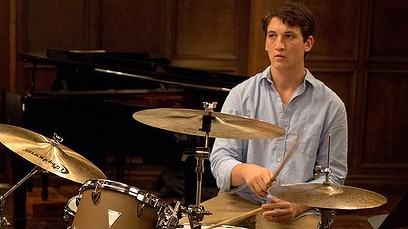
Seeing a film for the first time in a long while is a strange thing. I first saw Whiplash way back in May 2014 at Cannes, and proceeded to spend the next eight months shouting things like "it's amazing!", "a game-changer" and "that ending!" at anyone (aka no-one) that would listen. After a second viewing I can confirm that yes, Whiplash is still great. Only this time I found myself liking the film for reasons that I hadn't noticed before, reasons that I'm not even sure director Damien Chazelle meant to be in the film. Whiplash is a great film because it, just like last year's Nightcrawler, The Wolf of Wall Street, The Social Network, or even films as far back as Altman's The Player, states a fact that is obvious to all of us but that we politely deign to mention for fear of upsetting their fragile egos - if you are a middle class white man, there is little to nothing that will stop you from getting what you want, no matter how many people you have to manipulate, trample, rape or kill to get it.

Why then, you may ask, does that make Whiplash such a good film? Aren't there enough films out at the moment about white men trying to reach for the American (or English, if you look to The Imitation Game and The Theory of Everything) Dream? Should I just go see Birdman or Foxcatcher instead? Well, let us propose something that has long been stated by theorists - cinema is a mirror that can be used to view ourselves and our society. Just like looking at yourself in a mirror after a long cry or a heavy night, it's not always particularly flattering. What do we see when we look through the cinematic mirror? We see a complete lack of diversity, and white men dominating the scene (both on and off-screen) just because they're white men. And another thing - cinema is supposed to be more than an just artform. Isn't cinema is a device to change the world? Has it done much changing so far? Hell no it, but maybe one day it will. So, the more films we make about the type of guy that saunters into a job interview, raises one eyebrow because he knows he's earnt it and ends up running the country within a year get made, the more we'll start to think that hey, isn't this a little problematic? Maybe we should question this, not just in our cinema, but in our society. It's worth pointing out as well that this is the inherent difference between films like Whiplash and Nightcrawler and films like Birdman and Foxcatcher - the directors of the former give us films filled (perhaps accidentally but nevertheless effectively) with the inevitability of white male privilege, whereas the latter try to convince us that oh, isn't life such a struggle for the white man? How will this famous actor manage to put on a play? Foxcatcher is a little different in terms of Mark Ruffalo and Channing Tatum's characters as there is actually a serious element of win or lose when it comes to wrestling, but the idea of the white American Dream is still there first and foremost.

A counter example of this is a film I haven't written about for a while, (so I'm going to be indulgent and do so here) Inside Llewyn Davis. Oscar Isaac's Llewyn is talented, and he sure as hell knows he's talented. Just like Miles Teller's Andrew, he treats people like shit because he thinks he's "better" than them due to his talent. So what's the difference between Teller's Andrew and Isaac's Llewyn? It's the colour of his skin of course. In reality, Isaac is Latino, and in the film he's Italian American. In one memorable scene, after F Murray Abraham's Bud Grossman rejects him as a solo singer, he offers him two pieces of advice for blending into the background and making it as part of a bland trio: "don't go in the sun, and shave your beard into a goatee". Due to his ethnicity, Llewyn's only option for stardom is to blend in and conform. Andrew on the other hand, can make it on his terms thanks, once again, to his established privilege.


The last scene of Whiplash is a solidification of all I have been talking about above. Throughout the film we are lead to believe that Andrew is a big bright shining star, and while it's exhilarating to watch all the highs of his talent, its also a little satisfying to watch the lows. So when you see him be beaten yet again by his ex-teacher and antagonist, you think it's finally all over. Forget talent, it's all about who has the bigger balls, and who can pull one over on who. That is, until he comes back out onto that stage, and begins his tour-de-force, an ace class in how to manipulate people in order to get what you want. By forcing his teacher to go along with him and help him give the best performance possible, Andrew starts once again to ascend to the top. J.K Simmons's character in Whiplash is certainly not perfect - far from it in fact, he's a homophobic (pretty much all kinds of phobic to be perfectly honest) bully. But it's a little disheartening to see what was once such a strong character be completely pulverised by his protégée and turning into a smiling, encouraging put upon helper. But hey, that's just the way it goes isn't it? Just like the phoenix, you can only keep the privileged white man down for so long - it's their destiny to ascend from the ashes to restore the status quo of society.

Grace Barber-Plentie

Monday, 20 October 2014

LFF Review: Girlhood


I seem to have an excellent track record for picking good final films to see at festivals. (Aside, that is, from the time at Cannes when I stumbled, weary from long queues and hot weather into The Colour of Pomegranates, not expecting a beautiful and still mediation on life) At last year's London Film Festival, my last viewing was a little-known film called 12 Years a Slave which of course never got picked up by a distributor and received any success… And this year I managed to once again pick an absolute gem, in the form of Celene Sciamma's third feature, Girlhood.

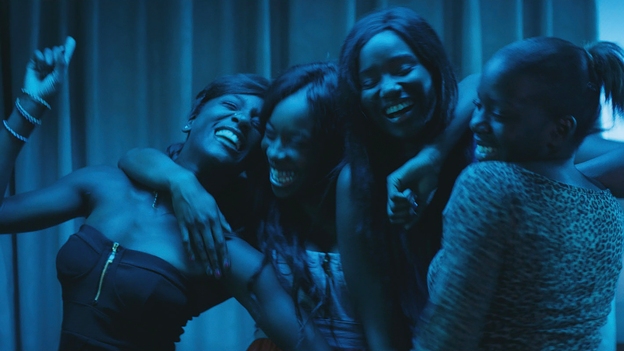
The film follows the life of Marieme, (or "Vic", short for victory as she is renamed) as she tries to juggle life in a French banlieue, a difficult home life, first love and new friendship. Her world is suddenly turned upside down when she is befriended by a gang of tough girls, lead by the beautiful and seemingly fearless Lady. Coming of age is by now a well-worn genre, as is the "gang" movie, but Girlhood manages to be a breath of fresh air for one reason - the gang shown here are comprised of young black girls. This may not seem like much, but ask yourself the last time that a young black woman - and in this case, a multitude of them - were really allowed any authority in film. While they may associate with, or even sleep with members of a male gang, Marieme, Lady and co never allow themselves to become gang member's mols. The whole film is focussed on Marieme's decisions and how they effect her life - if she ever becomes a passive figure in the film, that decision is down to her.

With Girlhood, Sciamma offers the best argument for the concept of the Female Gaze in a long time. It's undeniable that she and her camera adore her subjecst. Shot in harsh neon lighting, or in near darkness, Marieme's skin often appears to glow. There are a multitude of shots of female bodies in this film but they always amount to more than just a sum of a few parts. Instead, Sciamma seems enraptured by these girls, and passes this rapture on to the audience. Whether shown dancing to R&B in crop tops and shorts, or in the midst of a ferocious game of rugby, there is no denying that these girls are physically beautiful, but they are never overtly sexualised for a purely male viewpoint. Most refreshingly of all, Sciamma uses this view not just in her camerawork but in her script too. In an intimate scene between the four friends, Marieme shares a memory of walking behind all of them - "All I could think was that you were beautiful, so beautiful." That's not the say that there's no female rivalry in the film - there are ferocious fights between Lady, Vic, and the leader of an opposing gang - but here they fight with their fists, not with easy disses with "slut" and "whore", and they fight for power, rather than men.

All in all, Girlhood is an electrifying look at female friendships and coming of age from a director who seems to relish the subject. From the blue-tinged cinematography (giving the film a cold but deeply powerful look, contrary to last year's Warmest Colour which the film will almost certainly be compared to) to the scene in which the girls, in shoplifted dresses, mime along to the entirety of Rihanna's "Diamonds", there is so much to look at, and to love, here. But better yet, Sciamma is able to touch an emotional chord - not just with the black women - or any women in the audience for that matter - who come to see it, but rather with everyone. The film encompasses many emotions - happiness, fear, love, hate - and it is impossible to not feel at least one of them whilst watching it.

Grace Barber-Plentie
4.5/5

Wednesday, 15 October 2014

LFF Review: Mommy


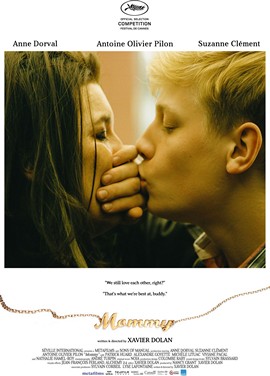
What makes Xavier Dolan a great director (as far as this first-time viewer can tell at least) is that he really doesn't give a shit. Shoot a film in a 1:1 aspect ratio? Eh, why not. Fill a soundtrack with the songs of yesteryear such as Oasis, Dido and Eiffel 65? Easy done. (Saying this, the film's montage set to Wonderwall really is one of the highlights of the year) Give the audience an extended wish-fulfillment sequence just to sage our worries about the film's protagonists, only to cut back to their bitter reality? Why the hell not. Canada's latest wunderkind (and official Cannes winner as of this year, thank you very much) Dolan takes our expectation of a simple story of a mother and son trying to survive and turns them into something that could easily become cringe inducing melodrama. Luckily, he seems to know exactly what he's doing.

The film opens with a dystopian message: the year is 2015 in a fictional Canada, and a new law has been introduced that allows parents to place their children in hospital straight away if they become an emotional or financial toll. This message is one of the few wrong turns that Dolan takes with the film, introducing Chekov's gun - or Chekov's law if you will - to hang over the whole of the film. We're then swiftly introduced to Anne Dorval's Die, a strong-willed, gloriously trashily dressed single mother who's been summoned to collect her son Steve from a detention centre. Die and Steve attempt to forge a new life together, but with Steve's ADHD and attachment issues plus money problems heavy on both mother and child's minds, it's not exactly easy.

Parent and child struggling against all odds is hardly new territory, (Although when was the last time we saw a really interesting mother and son dynamic in film? I'm struggling to think) hence Dolan's unorthodox tricks, which raise the story from dull melodrama to incredible filmmaking. What's important to note about Mommy is how much of it is actually cringe-inducing. The soundtrack is particularly ridiculous and nauseating, and there is a moment in which Steve skateboards towards the camera, gestures with his hands, and the screen widens from the 1:1 ratio to widescreen that could plausibly have been plucked straight from a Zac Braff film. Yet somehow Dolan is in the know about just how ridiculous to make it, using just the right amount of cringe, somewhat similarly to Pedro Almodovar's use of lush, camp cinematography.

Dolan also has another important tool in his pocket - the performances. Dorval, star of Dolan's debut I Killed My Mother is an absolute tour-de-force, eliciting the same charisma in a simple close-up of her face as she does in a furiously delivered monologue. As Steve, Antoine Olivier Pilon may not have the same level of maturity that Dorval does, but he more than makes up for this with his highly expressive face. The two together are an absolute dream team, playing the ups and downs of the duo with ease. Suzanne Clement also shines as Kyla, a shy neighbour who Die and Steve seemingly rescue from her dull suburban life and drag into their crazed world. In all honesty, there's barely a bad performance in the piece.

Of course every film as anticipated and lauded as Mommy has to have a few problems. An early scene in which Steve demonstrates his anger issues by firing an incredibly racist tirade of abuse at a black taxi driver goes to unnecessary extremes seemingly just to illustrate Steve's extensive vocabulary of swear words and quick temper. And, as previously mentioned, the law introduced at the film's opening seems a little too dystopian for a (fairly) straight drama. But overall, Mommy is an unabashed success, (as illustrated by Dolan's Cannes win back in May) yet another step in Dolan's apparent domination of cinema before he even turns 30.

Grace Barber-Plentie
4/5

Friday, 10 October 2014

LFF Review: Appropriate Behaviour


With the recent (and well overdue) influx of films and TV shows about women in New York making terrible life decisions, (Lena Dunham obviously leads this charge, with films like Frances Ha and Obvious Child and the gloriously stupid Broad City following behind) it can be easy to groan "really? another one" when another film about a woman in her 20s having life/relationship problems is announced. Luckily Appropriate Behavior, the feature debut of Iranian Desiree Akhavan manages to distinguish itself from the pack whilst also returning to the tropes of what is now becoming a very successful genre.

Akhavan's Shireen is first shown dumping all of the belongings that she kept in her ex-girlfriend's apartment in a dumpster - other than a giant silver strap-on that she bought for the afformented ex's birthday - and striding off (somewhat reluctantly) into her new life. Just like Greta Gerwig's Frances and Lena Dunham's Hannah, we meet Shireen at a moment where her life has utterly fallen apart, and oversee how she (attempts to) piece it back together. Shireen has multiple problems - she's newly single, she's bisexual but not "out" to her Iranian family, she needs a new place to live and a new job. And while she faces setbacks getting most of these goals, we're always confident in her ability to achieve them, and at the end of the film, in a very simple but very effective shot, we see that she's able to do this.

Every film about a woman in a mid-20s crisis needs a good leading lady, and Appropriate Behaviour more than has that in Akhavan. She's like a brilliant deadpan cross between Rosario Dawson, Aubrey Plaza and Greta Gerwig, choosing to express her problems with a pained look rather than a full-blown hissy fit like Dunham. What really works for Akhavan herself and her film is the way that she keeps her Iranian roots pride of place. While she moans about the incompatibility between her sexuality and her religion, it's clear that she is proud to be Iranian, and the reoccurring presence of Iranian New Year's Eve parties are a lovely touch considering how little we see Middle Eastern culture in American cinema, particularly in a comedy.

Another thing that works about Appropriate Behaviour is that, despite Desiree's multiple sexual experiments and blunders, (including a painfully awkward attempt at a threesome with a Brooklyn hipster couple) and the flashbacks that comprise her relationship with ex Maxine, it's not necessarily a film about romance. There's no romantic subplot thrown in just for the sake of it, which is something that you could argue about Obvious Child - instead, it's all about Shireen. She may spend a lot of the film pining over her ex girlfriend and attempting to win her back, but in the end she finds her own kind of closure, and seems content on her own.

Though it does follow closely to the storyline and tropes of the female led hipster comedies of late, Appropriate Behaviour is smart enough to distinguish itself from the pack with some smart observations of sex, love, hipsters and ethnicity. This is a film that was born to do well on the festival circuit, but I'm also more than certain that it can break through to the mainstream and find an audience that are just as happy to laugh at and root for Shireen as they are for Hannah or Frances.

Grace Barber-Plentie

3.5/5


Wednesday, 30 July 2014

On Chris Pratt and Chubby Superheroes


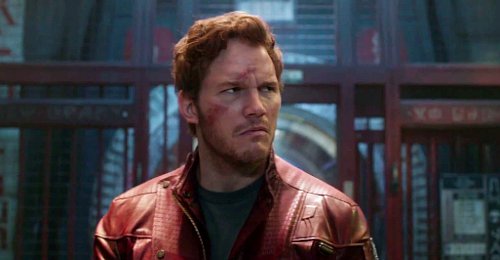
As most of my nearest and dearest could tell you, I'm just a tad obsessed with the new and improved, french braiding, Guardians of the Galaxy-starring Chris Pratt. Or, as I am constantly referring to him, "Handsome Chris Pratt". Fans of Parks and Recreation however will know that Pratt has not always been this way - his character on the show, Andy Dwyer, is a loveable chubby idiot - a sort of cross between Zach Galifinakis and Seth Rogen. Both versions of Chris Pratt are wonderful, and the more parts that he gets, the better. (At the moment, my dream film in a rom-com starring him, Adam Driver and Sam Rockwell as brothers whose father, Christopher Walken, worries over them as they attempt to pursue girlfriends that are well-rounded and talk about stuff other than their boyfriends, played by Lupita Nyong'o, Rosario Dawson and Christina Hendricks. I just came up with this in like 3 minutes but I can already see money flooding in…) Currently, Pratt's embarking on a seemingly meteoric rise to fame as he follows up Guardians of the Galaxy with Jurassic World. But, can you guess which version of Chris Pratt it is that's getting famous? Yeeeep, you guessed it.

Pratt's character in Guardians of the Galaxy, Peter Quill, was abducted from the Earth when he was a child, and spent his youth roaming the galaxy. He considers himself to be an infamous outlaw, (whereas of course his reality looks vastly different to his dreams) all of the while listening to a cassette recording of "Hooked on a Feeling". He's an everyman, albeit one with a six pack and rugged good looks. So why exactly did Pratt have to turn into such a hulking he-man to play such a role? Yes, he looks great with the muscles. And it must certainly be easier to market him as a "proper" blockbuster star now that he's slimmed down. (As we are all aware, there are only two types of "fat" actors - comedic ones like Melissa McCarthy, and serious ones like Phillip Seymour Hoffman.) But why, rather than bulking up, couldn't he have played the character as he was? It's not exactly like his performance is one of method acting to back up his physicality - he's essentially playing a douchier version of the character that he plays in Parks and Rec and various comedy films that he's starred in… except in Outer Space.


And, come to think of it, why aren't there any chubby superheroes anyway? I get that the whole point of being a superhero is being super fit and being good at fighting and annihilating bad guys, but are people aware that it's possible to be a bit chubby and still healthy? Most superheroes were born with powers or in distant realms which pushes them into this weird other-worldy category which seems to explain their disturbingly healthy and toned bodies, but what about man-made heroes like Iron Man and Batman? (Although I suppose being a darkly tormented orphan would be enough to put you off your food) All Batman does is sit in a dumb shaped car talking in silly voices and I'm pretty sure that Iron Man just flies everywhere, so why couldn't they be a few pounds heavier? The news that Thor is to be turned into a woman and that Captain America is going to become black is amazing - even for non-comic book fans such as myself - and these are considered to be "drastic" decisions. Piling a few pounds onto a character - or inventing on that already looks that way - is nothing.

So while I will of course see Guardians of the Galaxy, and I will cheer every new development what will hopefully be a very lucrative career, I will still curse the fact that Chris Pratt's new career comes at the price of him changing his image. And I'll continue to anticipate the day that guys that look like the old Chris Pratt can be cast as superheroes, and that artists will write them to be chubby in the first place.

Grace Barber-Plentie
Sunday, 13 July 2014

Review: Boyhood


It's hard to believe that Richard Linklater is an ordinary guy, (I mean really, have you seen him? He is, in the nicest way possible, spectacularly ordinary looking.) and not some sentient cyborg that is able to tap into every facet of human emotion and then accurately reproduce them on screen. But he is an ordinary guy, one who has managed to transport some of life's greatest experiences such as tentatively falling in love and forming a relationship, (The Before Trilogy) and leaving school and taking the next steps in life. (Dazed and Confused) Admittedly, he does put his own "Linklater Twist" on both of these scenarios by having these films set over just one day, but nevertheless, the naturalistic acting and dialogue of Linklater's films really does reinforce how talented he is at building characters and filling scripts with natural emotion.

In Boyhood, his latest film, he takes the experiences shown in his previous films and more, but stretches the time-frame that we see them take place in to 12 years. In just under 3 hours, we see Ellar Coltrane's Mason (a shoe-in for a million Best Actor awards if we lived in a kinder world) go from an innocent child, to an emo teenager, to a young man. Unlike most Coming of Age films that feature events like first kiss, losing your virginity and the stability of your friendships, Linklater is mainly focused on the non-events in life. Mason moves from town to town, and friends and girlfriends appear and disappear at will. We are only given brief snapshots of each of the 12 years, but each year is as engaging as the last.

It's clearly a deeply personal film for Linklater and his cast, who would meet once a year to film for a few days before going their separate ways to focus on other projects and general life. But, I was surprised to find, Boyhood was also deeply personal for myself to watch. While of course I have felt a connection to certain films and characters in the past, I was completely taken aback by how much of Boyhood seemed to correlate with my life. Having just finished my first year of University, (the film takes us up to when Mason moves away to Austin to start college) the 12 years that play out in the film seem so recent and relevant to me. And while some events are deeply rooted in the grand tradition of "American Boyhood" - a scene where Mason is given a gun and a bible for his 15th birthday could surely not happen anywhere other than America - there are scenes in the film that every 21st Century teen or adult can relate to. Linklater carefully selects music that was popular in each year of the making for the film's soundtrack, and hearing certain choices such as The Flaming Lips and Vampire Weekend instantly brought moments from my childhood when I was the same age as Mason rushing back. I have often referred to the Before Trilogy's Jesse and Celine as feeling like "old friends that I haven't seen for a long time", but here Boyhood offers you Mason as someone whose life you can choose to view through his own viewpoint or your own.

With the Before Trilogy, an obvious homage to Truffuat's Antoine Doinel series, Linklater quietly shook up independent cinema. With Boyhood, he changes cinema as we know it. Seeing actors age naturally on screen is something that is both an odd thrill - being able to watch someone's height, weight and hairstyle change in the space of half an hour is endlessly entertaining - and a choice that feels absolutely right. Whether other directors choose to follow Linklater's lead will have to be seen, but even if they do, it seems unlikely that they could possibly come close to what is seen here. We are shown what feels like a whole life on screen - although Boyhood's 12 years feel luxurious compared to the entire "extraordinary" life that David Fincher attempts to condense in The Curious Case of Benjamin Button - and it is one that you take great joy in watching, even if it is filled, just like life, with sadness, heartbreak and misery. We go to the cinema for two reasons - to see realism and escapism. Here, Linklater perfectly allows us to have both.

Grace Barber-Plentie

5/5

Thursday, 12 June 2014

Top 10 Books That Should Be Turned Into Films

I am a creature of tradition, particularly pop culture based ones. Every Halloween, you'll find me rewatching every Community Halloween special, most likely followed up by It's the Great Pumpkin, Charlie Brown. Ditto Christmas, where I'll religiously listen to Phil Spector's Christmas record and anxiously wait for the glorious moment when Love Actually's on telly. This year marks the third year of me embarking on the third year of a tradition that seems to have sprung up out of nowhere - my annual Summer re-read of Donna Tartt's The Secret History. I've been telling people that the book is one of my favourites ever since I absorbed its final words, perhaps a little controversial considering I've only read it twice. But there is something utterly addictive about Tartt's prose, plus there's something else about it that leads me to return to it ever year… it would make a perfect film. Upon finishing it for the past two years I've huffed and puffed around the house for days on end, moaning that it would make a fantastic film, which always leads me to think of other books that really deserve the big screen treatment. Considering that this year's Best Picture at the Oscars was based on an autobiography, I'm sure there'll be a lot more adaptions being released in the coming months, but here are just a few that really deserve to get made.

The Secret History - Donna Tartt


What's it about:

Lonely working-class boy Richard falls in with the well off and eccentric classmates of his Greek class, but soon finds that they are hiding some dark secrets which threaten to tear them all apart.

Why it should be a film:

I can't get the imagery out of my head! Certain moments from the book - one significant event in particular that would ruin the book's plot to go into in detail - have stuck in my mind ever since I read it for the first time. It would be a college film but one completely different from the debouched activities of Bad Neighbours or Rules of Attraction - (fun fact: the characters from Rules of Attraction have brief cameos in Secret History and vice versa as Brett Easton Ellis and Donna Tartt went to college together) it would be more ethereally beautiful yet oddly sinister like the Virgin Suicides but with the bourgeois/obnoxious charm of something like Damsels in Distress

Who should star:

He's getting on a lil bit now but Andrew Garfield would be perfect as Richard due to his talent for playing slightly bland and angsty outsiders. The object of Richard's affections, Camilla is said to have an angelic beauty, so who better than actual real life angel Julia Garner from Electrick Children to play her?

Orpheus Rising - Colin Bateman


What it's about: 

After his wife dies in a violent massacre, acclaimed and reclusive author Michael Ryan is forced to revisit the town where it happened for the 10th anniversary memorial. But he soon finds himself caught up in a story that transcends life, death, right and wrong, and reunites him with some faces from his past.

Why it should be a film:

I only read this book because the cover looked vaguely interesting and the word Orpheus immediately appealed to my Greek myth-loving self, and I'm constantly glad that I did. It's an odd little book - everyone that I've recommended it to has disliked it - because it covers so many genres in its pages. Put in the right hands, it could be a tight thriller, a love story, a mystery… or even better, a combination of all three and more that really do the words justice.

Who should star:

Michael hails originally from Ireland so, erm… hi Michael Fassbender. As we all know, the man can do little wrong when it comes to acting, so playing a tormented quasi-alcoholic should be easy of him.


Generation X - Douglas Coupland


What it's about:

This is a book that's about everything and also nothing. Despondent Gen X-ers Andy, Claire and Dag have escaped their "McJobs" and moved to the desert, living a simple life of booze, picnics, and storytelling. And that's basically it.

Why it should be a film:

For some reason, none of Coupland's books have ever been adapted - whether this is because their considered unfilmable or because he won't give his permission for them to be made is a mystery to me. It's understandable that someone could easily come along and ruin the genius of Generation X, but it is simply too brilliant never to be filmed. Coupland goes into such details with every aspect of his characters lives - what they look like, talk like, dress life, what they drink, what kind of stories they tell - and I need to see this on the screen!

Who should star:

Okay so this is actually a really tricky one. Ezra Miller has that mad eccentric vibe down so could be good for Dag, but the rest of the cast is a mystery. What I do know is that Gregg Araki should direct - it's full of apocalyptic doom like most of his best films after all.


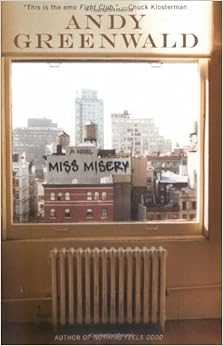
Miss Misery - Andy Greenwald


What it's about:

A bored New York hipster faces a lonely summer stalking other people's blogs (this book was pre Blogspot/Tumblr so Greenwald was definitely onto something) after his girlfriend leaves to work in Europe. In order to make himself seem cool and to woo his online flame, the titular Miss Misery, he creates a "cool" blog version of himself - only to find that this doppelgänger is real and has decided to wreak havoc in his life. 

Why it should be a film:

A quote on the cover describes it as "Fight Club for hipsters", and that pretty much nails it. There have been a lot of films about doubles out recently, so why not continue the trend? It also contains a vaguely cautionary note about the "dangers" of spending too much time on the internet - you'll create a coke-sniffing douchebag DJ doppelgänger who'll try to ruin your life. It's a little tongue in cheek but there's definitely a lesson in there somewhere! Another good point about the book that will translate perfectly to the screen is its obsession with music. Every song that plays in the book is noted (Check out a full list here) so it would have a killer soundtrack. 

Who should star:

This may just be because I'm thinking about people that have played doubles already, but Sam Rockwell is so perfect at being charming buffoons AND sleazy guys that he could nail the double role with ease. Plus, the world needs more Sam Rockwell films. 


Bad Kitty - Michele Jaffe


What it's about:

Amateur sleuth unintentionally uncovers a dark mystery when she attempts to help a little boy and a cat out whilst on holiday in Vegas. Throw in her friends, country music, a pimped-out modern day Mystery Machine, a love interest and a roller disco, and you've got the new Nancy Drew.

Why it should be a film:

Firstly can I just say that people are always moaning that there are no YA books/films with people of colour as the main characters, (and yes, they are definitely onto something…) but here's an excellent one with a mixed-race, curly haired protagonist that seems to be criminally under acknowledged. The rest of the books on this list are aimed at "adults", but done properly, this could easily be a film that transcends age barriers like Mean Girls, Heathers and Clueless. Also, I haven't read it for a while, but every time I do, I still seem to find myself laughing out loud at it. Always a good sign.

Who should star:

Belle actress Gugu Mbatha-Raw for main character Jas, and Anton Yelchin, Emma Stone (is Emma Stone too old to be playing teenagers yet?!) and Juno Temple for her friends Tom, Polly and Roxy.


Black Hole - Charles Burns


What it's about:

In the 70s, the teens in a small American town all begin to develop mutations after catching a sexually transmitted disease.

Why it should be a film:

Comic book films - and not just those about superheroes - seem to work! Just look at Ghostworld! Black Hole could definitely have the same off-kilter quirky vibe that Ghostworld has, or could even be shot in black and white animation just like Persepolis. It manages to perfectly convey teen angst through just pictures and a few words, so think how well it could work on the screen.

Who should star:

Shailene Woodley would be perfect as the main character of Chris and I'm sure there's a part for Miles Teller in there somewhere… am I just listing the cast of The Spectacular Now? Um yeah probably.


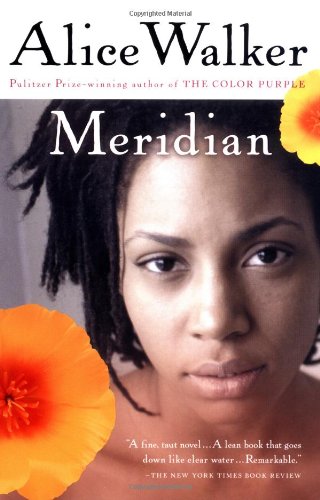
Meridian - Alice Walker


What it's about:

The trials and tribulations of Meridian Hill, a young woman who abandons her child to become a Civil Rights activist, and then abandons her movement to find a more peaceful way to challenge authority.

Why it should be a film:

Can you believe that only one Alice Walker book has been turned into a film? And the end result, The Color Purple, was… let's just say interesting. But if this were done respectfully and with dedication to the source material, (can Steve McQueen direct it please?) then this could be a beautiful film. Like anything Walker writes, it's striking and deeply moving but also at times full of life and funny, and offers a unique look at the Civil Rights movement from the viewpoint of not just black but also white people involved in the movement.

Who should star:

Lupita Nyong'o, please and thank you.


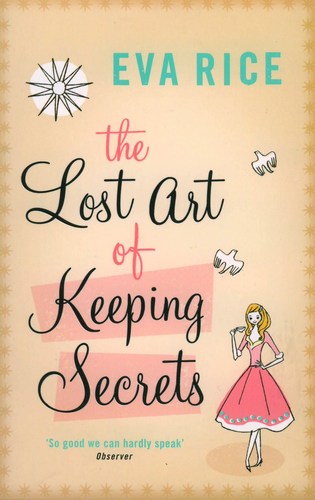
The Lost Art of Keeping Secrets - Eva Rice


What it's about:

Penelope lives in a crumbling castle with her "tragically beautiful" mother and wannabe rock n roll star brother. When she meets the enigmatic Charlotte and her mysterious magician cousin, her world seems ready to change.

Why it should be a film:

So yeah, this book is essentially a clone of I Capture the Castle set a few years later, but what's wrong with that? It's charming, sweet and funny, and period pieces are always fun. As this one's set in the 50s it would have a great soundtrack - Penelope and her friend Charlotte are obsessed with Johnny Ray, and Penelope's brother wants to be the new Elvis.

Who should star:

Well I was going to say that Carey Mulligan and Ben Whishaw should have the roles of Penelope and the errant magician Harry, but I got the shock of my life when I discovered that they're nearing/well into their 30s. Maybe unknown actors all round? 


All My Friends are Superheroes - Andrew Kaufman


What it's about:

Everyone in Tom's life is a superhero apart from him. On the eve of his wedding to the Perfectionist, (whose power is to make every situation in her life perfect) her ex, Hypno, hypnotises her so that she thinks that Tom is invisible. She decides to move away, and Tom has until the end of her plane journey to start a new perfect life to make her see him again.

Why it should be a film:

It's so weird and cute and quirky, basically the sort of stuff Michel Gondry and Spike Jonze live for! (ironically, the book's written by Andrew Kaufman, who, whilst sharing his name, is not the scriptwriter who's worked with Gondry and Jonze) It'd be nice to have a superhero film that's not epic and action filled like most Marvel films, and not gross and sexist like the Kick-Ass franchise. All the superheroes in this book are normal people with normal lives… they just happen to have powers too. Plus the powers that the superheroes in this book have are so weird and unique, such as TV girl, a girl who cries TV sets.

Who should star:

Jesse Eisenberg is pretty good at the slightly irritating everyman roles, and Brie Larson really needs to be in all the films ever, so she'd make a pretty good perfectionist.

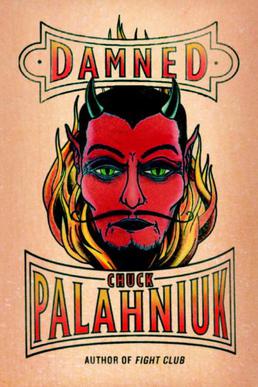
Damned - Chuck Palahniuk


What it's about:

13 year old Maddy, daughter of rich and famous actors, wakes up in hell after dying from a "marijuana overdose". After forming a Breakfast Club-like motley crue of a geek, a cheerleader, a rocker and a jock, she decides to conquer the underworld and take on Satan.

Why it should be a film:

It's hard to believe that only two of Palahniuk's books have been turned into films, (the cult Fight Club and the underrated but enjoyable Choke) and the world could definitely use more of his creations popping up on the screen. Damned is as messed up as the other adaptations of his books, if not more so in fact - there's a scene where Maddy rips off a certain historical figure's moustache and then wears it as a medal - and the cinema has sorely been missing some Palahniuk mayhem for these past few years.

Who would star:

Maddy is supposed to be 13 and white, but let's be creative here - Gabourey Sidibe has proved from her turn in American Horror Story that she's adept at both being a bitch and dealing with the supernatural, so she'd be perfect.

Grace Barber-Plentie