Showing posts with label Celine Sciamma. Show all posts

Wednesday, 13 May 2015

What To Watch After You've Seen Girlhood


The wonderful, glorious, poignant (look, just read my review so I can stop wasting adjectives on it, okay?) Girlhood is finally released in UK cinemas on the 8th of May. "Finally", many of you may say, "a coming of age film about a black teenage girl". And while there may be a severe lack of them, it's my duty to inform you that Girlhood is just one in a (admittedly very short) list of beautiful coming of age films about black girls and women. So if you're trying to cope with the wait until you can see Girlhood again, or love it so much that you're hungry for more, make sure to check out these incredible films.


Love and Basketball


It's hard to precisely name what makes Love and Basketball so great, aside from that fact that it, like all the very best rom-coms, takes genre conventions and either subverts or completely disregards them. The film tells the story of best friends turned lovers Monica and Quincy, who both aspire to be basketball stars. While initially the film may look as though it's about both characters, this is well and truly Monica's story, made evident by the absolutely brilliant and undeniably feminist final scene in the film. 

Crooklyn


Okay, so this may not be Spike's best, but it's certainly one of his better depictions of women. (She's Gotta Have It could've easily made this list, but there's that subplot towards the end of the film that just... no.) Loosely autobiographical and co-written with siblings Joie and Cinque, Crooklyn follows young Troy's trials and tribulations in Lee's native Brooklyn, dealing with her boisterous family. It's almost as nuanced as Lee's films about his male characters, which is refreshing, even if it is still a little lacking with the way it treats its female characters.

Our Song
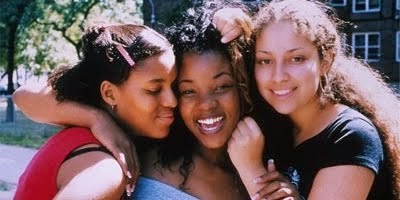

Starring a young Kerry Washington, Our Song could easily be labelled as just another stereotypical "hood movie", but in actual fact, the film's lazy, naturalistic pacing, makes it feels a lot more like a female, transatlantic cousin to French classic La Haine. The film follows three friends who have to deal with being separated when their school is closed and they are separated. Similarly to Girlhood, Our Song's protagonists are never treated like victims, but like real characters whose decisions - good OR bad, are pondered upon and never judged by their director.

Belle


Easily one of the worst advertised films of recent times, it's easy to believe that Belle is yet another Pride and Prejudice-esque romance, but with a twist... the main character is, shock horror.... BLACK. But to label Belle this is to massively undersell it, as it's actually a very beautiful and measured coming of age film that clearly respects and loves its protagonist. The film is also a subtle critique of white upper class British society who claim to have no links to slavery, and who are "tolerant" of non-white people to an extent. The film was also the breath through for the luminous angel in a human body that is Gugu Mbatha-Raw, so hopefully it'll be even more acclaimed in a few years when she's a huge star and people want to look back at how she "made it".

Flirting


Similarly to Love and Basketball, Flirting is more of a two-hander, and sadly focuses more on the male part of the film's couple, but it's a brilliant year nevertheless. A sequel to the under-seen (AKA I haven't seen it yet) The Year That My Voice Broke, Flirting follows nerdy teen Danny's miserable time at boarding school, where he ends up falling in love with an enigmatic new girl (played by Thandie Newton in one of her breakout roles) who goes to the all girls school across the lake. Every time I think about this film, it illicit the kind of "awww" that I usually save for thinking about dogs or Phillip Seymour Hoffman in Boogie Nights. It's subtle, sweet, and it allows its black female character to be more than just a girlfriend or a supporting character.

Just Another Girl on the IRT


Leslie Harris's debut (and at present, only) Sundance prize-winning film is similar to Our Song and Girlhood in that it accepts its protagonist, flaws, ill-advised decisions and all. Following the brilliantly mouthy Chantel, (in one of the film's best scenes, she continuously interrupts her history lesson to ask why they never study black history) a smart high schooler who dreams of going to college but has to juggle her difficult family, boys, and an unexpected pregnancy. The film is filled with a frenetic energy and Chantel leads us through her life, constantly breaking the fourth wall to ensure that she is in charge of telling her own story.

Pariah


Dee Rees manages to combine two deeply important issues - race and sexuality - in her feature debut, allowing for a film that tackles a rarely seen subject in cinema - a black lesbian coming of age story. Lead by the brilliant Adepero Oduye, (who also gave a moving performance as a mother parted from her children in 12 Years a Slave) the film is a tender and mediative look at sexuality and family. Not only does Rees tackle what could be seen as a "tricky" subject, but she does so with skill and finesse, so it's exciting to think about how she'll tackle her Bessie Smith biopic that's due to air on HBO soon.

The Body Beautiful


Last but not least is one of the trickiest films on this list to get a hold of, but if you're clever at traversing the internet or hunting down films then you won't be sorry. Ngozi Onwurah's short manages to cram multiple issues - mother/daughter relationships, body image, cancer, interracial relationships - into its short time span, as well as focusing on its authors racial and gendered identity and how this shapes her place in the world. Filled with stunning imagery and beautiful ideas about femininity, The Body Beautiful is definitely worth searching for.

Monday, 20 October 2014

LFF Review: Girlhood


I seem to have an excellent track record for picking good final films to see at festivals. (Aside, that is, from the time at Cannes when I stumbled, weary from long queues and hot weather into The Colour of Pomegranates, not expecting a beautiful and still mediation on life) At last year's London Film Festival, my last viewing was a little-known film called 12 Years a Slave which of course never got picked up by a distributor and received any success… And this year I managed to once again pick an absolute gem, in the form of Celene Sciamma's third feature, Girlhood.

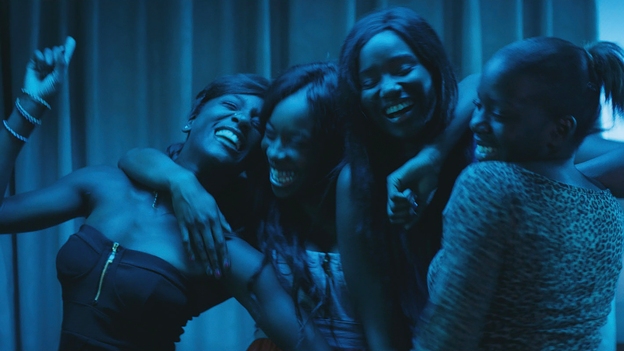
The film follows the life of Marieme, (or "Vic", short for victory as she is renamed) as she tries to juggle life in a French banlieue, a difficult home life, first love and new friendship. Her world is suddenly turned upside down when she is befriended by a gang of tough girls, lead by the beautiful and seemingly fearless Lady. Coming of age is by now a well-worn genre, as is the "gang" movie, but Girlhood manages to be a breath of fresh air for one reason - the gang shown here are comprised of young black girls. This may not seem like much, but ask yourself the last time that a young black woman - and in this case, a multitude of them - were really allowed any authority in film. While they may associate with, or even sleep with members of a male gang, Marieme, Lady and co never allow themselves to become gang member's mols. The whole film is focussed on Marieme's decisions and how they effect her life - if she ever becomes a passive figure in the film, that decision is down to her.

With Girlhood, Sciamma offers the best argument for the concept of the Female Gaze in a long time. It's undeniable that she and her camera adore her subjecst. Shot in harsh neon lighting, or in near darkness, Marieme's skin often appears to glow. There are a multitude of shots of female bodies in this film but they always amount to more than just a sum of a few parts. Instead, Sciamma seems enraptured by these girls, and passes this rapture on to the audience. Whether shown dancing to R&B in crop tops and shorts, or in the midst of a ferocious game of rugby, there is no denying that these girls are physically beautiful, but they are never overtly sexualised for a purely male viewpoint. Most refreshingly of all, Sciamma uses this view not just in her camerawork but in her script too. In an intimate scene between the four friends, Marieme shares a memory of walking behind all of them - "All I could think was that you were beautiful, so beautiful." That's not the say that there's no female rivalry in the film - there are ferocious fights between Lady, Vic, and the leader of an opposing gang - but here they fight with their fists, not with easy disses with "slut" and "whore", and they fight for power, rather than men.

All in all, Girlhood is an electrifying look at female friendships and coming of age from a director who seems to relish the subject. From the blue-tinged cinematography (giving the film a cold but deeply powerful look, contrary to last year's Warmest Colour which the film will almost certainly be compared to) to the scene in which the girls, in shoplifted dresses, mime along to the entirety of Rihanna's "Diamonds", there is so much to look at, and to love, here. But better yet, Sciamma is able to touch an emotional chord - not just with the black women - or any women in the audience for that matter - who come to see it, but rather with everyone. The film encompasses many emotions - happiness, fear, love, hate - and it is impossible to not feel at least one of them whilst watching it.

Grace Barber-Plentie

4.5/5